Niedrigwasser der Donau gibt Mammutknochen in Bulgarien frei
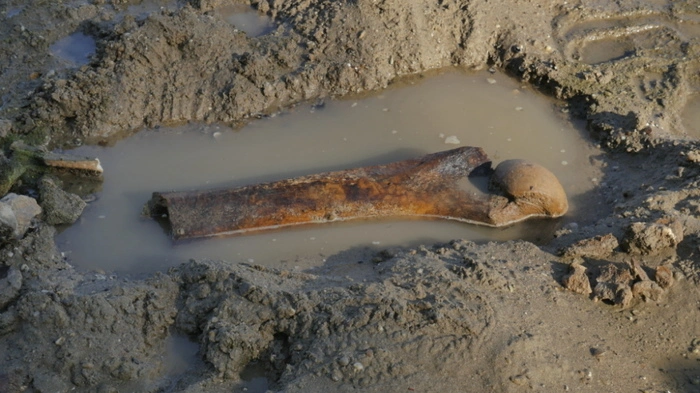
Die extrem niedrigen Pegelstände der Donau haben in Bulgarien einen Kieferknochen und Teile der Stoßzähne eines Mammuts freigelegt. Die Knochenteile hätten "sehr wahrscheinlich" einem Mammut der Eiszeit gehört, sagte der Direktor des Regionalen Geschichtsmuseums, Nikolay Nenow, am Donnerstag der AFP. Sie wurden in der Nähe der Stadt Ruse im Nordosten des Landes im Flussbett gefunden. Nenow geht davon aus, dass das Tier zu seinem Todeszeitpunkt noch jung war.
This handout photograph taken by Teodor Mechev and released on July 30, 2026, shows remains of an ancient mammoth, as historically low water levels on the Danube River exposed parts of the riverbed near the village of Ryahovo, north east of Rousse. The Danube -- which runs from the Black Forest mountains of western Germany through 10 countries to the Black Sea -- has dropped to record low levels in parts due to prolonged rain shortages and successive heatwaves since May. Woolly mammoths co-existed with early humans who hunted the cold-resistant herbivores for food and used their tusks and bones as tools. Specialists have so far identified a jaw bone, fragments of tusks, part of a shoulder blade and a femur with its articular head among the stash. (Photo by Handout / Rousse Regional Historical Museum / AFP) / RESTRICTED TO EDITORIAL USE - MANDATORY CREDIT "AFP PHOTO / ROUSSE REGIONAL HISTORICAL MUSEUM / TEODOR MECHEV - HANDOUT - NO MARKETING NO ADVERTISING CAMPAIGNS - DISTRIBUTED AS A SERVICE TO CLIENTS